Content
Every individual company will usually need to modify the eight-step accounting cycle in certain ways in order to fit with their company’s business model and accounting procedures. Modifications for accrual accounting versus cash accounting are usually one major concern. Understanding basic accounting terms and phrases can be helpful to anyone trying to gain a deeper knowledge of finance and business. Take a look at some basic accounting terms, including assets, liabilities, owner’s equity, debits, credits, and cash flow. Today, with computer-based systems, many kinds of transactions enter the journal without involving a bookkeeper or accountant. In retail shops, for instance, “Point-of-Sale” systems scan customer purchases during checkout. One touch of a cash register button print’s the customer receipt and makes the appropriate accounting system journal entries at the same time.
How is operating cycle shortened?
A company can reduce its OC in two ways: Speed up the sale of its inventory: If a company is able to quickly sell its inventory, the OC should decrease. Reduce the time needed to collect receivables: If a company is able to quickly collect credit sales more quickly, the OC would decrease.
The accounting working process starts with identification of transactions and its journalisation. After recording the transactions in journal these are to be classified and posted to ledger accounts. The unadjusted trial balance tells you the balances for each of your ledger accounts at the end of your reporting period. To prepare your unadjusted trial balance, go through the debits and credits in your ledger and make sure they balance out. An easy way to do this is to make sure the totals in your debit and credit columns match. The accounting cycle is a nine-step process businesses use to compile all of the information needed to prepare important financial statements.
Create An Adjusted Trial Balance
Make a note that some errors may occur even if the debits and credits match. An adjusting entry is a journal entry made at the end of an accounting period that allocates income and expenditure to the appropriate years. Adjusting entries are generally made in relation to prepaid expenses, prepayments, accruals, estimates and inventory.
Remember that when you recognize income and expenses depends on the type of accounting you use. If you run on cash accounting, you’ll look for every time that cash changed hands during the period. If you’re using accrual accounting, you’ll only recognize financial transactions when incurred. It helps to create the income statement and balance sheet and provide enough information for preparing the cash flow statement. Accounting cycle is a process of a complete sequence of accounting procedures in appropriate order during each accounting period. The accounts are closed to a summary account and then closed further to the capital account. Again, take note that closing entries are made only for temporary accounts.
Accounting Topics
Read on to learn the accounting cycle definition and steps in accounting process. The accounting cycle records and analyzes accounting events related to a company’s activities. The accounting cycle is a process designed to make financial accounting of business activities easier for business owners. A key aspect of proper accounting is maintaining record of expenses through Source Documents, paper or evidence of transaction occurrence.
It’s situations like these that can easily lead to an incorrect trial balance and risk delayed closing of your company books. The accounting cycle is the foundation of accounting practices in your company, it sets the bar for financial organization and consistency. Small businesses often operate on narrow profit margins, and access to cash may be limited. Following the accounting cycle helps the business owner stay on track by accomplishing several tasks at once and helps with organization, asset protection, and financial reporting.
Accounting Articles
Knowing how to read and interpret your financial statements can help you stay on top of your business’ finances and strategize for growth. Depending on the frequency of the transactions posting to ledger accounts may be less frequent. The accounts classify accounting data into certain categories and they are recorded in general journal entries according to that classification. Identifying the transactions from the events is the first step in the accounting process. In this step, the adjusting entries made for accrual of income, accrual of expenses, deferrals under the income method, and prepayments under the expense method are reversed.

Some income may have been earned but not entered in the books. Once you’ve converted all of your business transactions into debits and credits, it’s time to move them into your company’s ledger. Through the accounting cycle (sometimes called the “bookkeeping cycle” or “accounting process”). When it becomes clear an error exists somewhere in the system, accountants may create “temporary adjusting accounts” to restore the balance between total debits and total credits immediately. The objective then is to uncover the underlying errors, correct the errors, and close temporary adjusting accounts before the trial balance period ends. Historically, with paper-based accounting systems, journal entries and ledger postings were hand-written entries made by bookkeepers and accountants.
Step 2: Record Transactions In A Journal
This can include coding your accounts payable to the correct account, writing an invoice, reviewing receipts, creating an expense report, and paying your employees. You don’t need to keep all your transactions and events in one journal. For example, your cash transactions may exist in a journal separate from other financial events, like returned purchases or credit sales. This makes it easier to sort and find the information you need about cash transactions without wading through irrelevant raw data.
However, at the end of the year the company discovers it only used 50 units. The company must then make an adjusting entry to reflect that, and decrease the amount of the expense and increase the amount of inventory accordingly. Some balance sheet items have corresponding contra accounts, with negative balances, that offset them. Examples are accumulated depreciation against equipment, and allowance for bad debts against long-term notes receivable. The goal of the accounting cycle is to produce financial statements for the company. The accounting cycle is performed during the accounting period, to analyze, record, classify, summarize, and report financial information. Though the process is mostly the same, accounting software can help identify variances and prompt users to help reconcile them without creating explicit trial balances.
Error Checking And Trial Balance In The Trial Balance Period
Creating an unadjusted trial balance is crucial for a business, as it helps ensure that total debits equal total credits in your financial records. This step generally identifies anomalies, such as payments you may have thought were collected and invoices you thought were cleared but actually weren’t. Adjusting entries are accounting journal entries that convert a company’s accounting records to the accrual basis of accounting. An adjusting journal entry is typically made just prior to issuing a company’s financial statements.
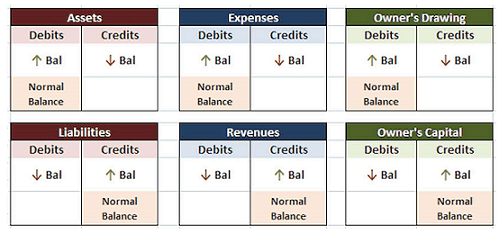
If they aren’t, there may be an error somewhere in your records or they may require entry adjustments. Once the accounting period ends, a trial balance is calculated. The purpose of this is to show the unadjusted balances per account and to provide a basis for the fifth step. When you close your books for the current accounting cycle, you zero out both the revenue and expense account balances.
What Are The 7 Steps Of Accounting Cycle?
Ensuring the accuracy of the transaction is also beneficial for when you create annual budgets and reports. The process of preparing the financial statements begins with the adjusted trial balance.
- According to going concern concept, it is presume that a business organization will run for an indefinite period.
- The first two steps of the cycle deal with collecting, analyzing and recording the data so the company is prepared should a customer or client inquire about a specific transaction.
- Once you’ve made the necessary correcting entries, it’s time to make adjusting entries.
- The last step in the accounting cycle is to make closing entries by finalizing expenses, revenues and temporary accounts at the end of the accounting period.
- At first to determine net income or net loss, the income statement is prepared from the revenue and expense accounts.
- Discover the role that technology has played in improving accounting, the practice of producing financial statements and reports.
The firm can still enter other kinds of transactions into the journal manually, of course. Manuel entry may involve salespeople, bookkeepers, or accountants, using an onscreen form on the computer. The accounting cycle reaches its ultimate objective at the end of the accounting period when the firm publishes financial statements. The accounting cycle purpose is to report the state of revenues, expenses, assets, liabilities, and equities accurately as they stand after a period of activity. The accounting cycle is an invaluable workflow map that formalizes the process of recording, classifying and summarizing a business’ financial transactions across a fiscal year. Adhering to the accounting cycle is conducive to impeccable financial statements, which can make your business more attractive to investors or help you get approved for loans.
One More Step
And for the other adjusting entries no reversing entries are required. When the accounting period ends, you’ll adjust journal entries to fix any mistakes and anomalies found during the worksheet analysis. Since this is the final step before creating financial statements, you should double-check everything with the help of a new adjusted trial balance. One important role of having the nine-step accounting cycle in an accounting department is the attention to detail each transaction gets in terms of analysis and recording. The first two steps of the cycle deal with collecting, analyzing and recording the data so the company is prepared should a customer or client inquire about a specific transaction.

Additionally, investors will be able to use these statements to gauge your company’s financial health. It is also worth noting that having accountants well-versed in small business taxes can find potential tax savings for your business. In a similar vein, if the IRS asks accounting cycle for your financial statements in the event of an audit, having proper statements can save time, money — and perhaps, your business. Just like the previous trial balance stages, this step ensures that the debits and credits in your post-closing trial balance match up.
- The $1,200 value merely transfers from one asset account to another.
- This is undertaken to ensure that the debits and credits remain equal after the closing of the nominal accounts.
- Free AccessFinancial Metrics ProKnow for certain you are using the right metrics in the right way.
- With double-entry accounting, each transaction has a debit and a credit equal to each other.
- For every company to succeed, it requires efficient financial management and proper documentation.
- Events are analyzed to find the impact on the financial position or to be more specific the impacts on the accounting equation.
The types of adjusting entries are prepayments, accrual, estimates, and inventory. ScaleFactor is on a mission to remove the barriers to financial clarity that every business owner faces. An accounting cycle is a continuous and fixed process that needs to be followed accordingly.
Answer this? The last step in our accounting cycle is to perform the closing https://t.co/KgfJAyZR9D
— Essayhand (@essayhand) August 28, 2017